Advantages
- Surfaces self-repair after damage, maintaining full water repellency long term
- Eliminates hazardous chemicals, delivering safe and eco-friendly surface protection
- Works across corrosion, anti-icing, drag reduction, and biomedical applications
- Practical manufacturing methods make adoption scalable and cost-effective for industry
Summary
Metal surfaces with extreme water repellency are essential across aerospace, marine, energy, and biomedical industries, where corrosion prevention, anti-icing, drag reduction, and biofouling resistance directly impact operational efficiency. Yet current superhydrophobic treatments fail on two critical fronts: they rely on toxic, environmentally persistent PFAS chemicals, and they degrade permanently after mechanical wear, losing their protective properties with no ability to recover.
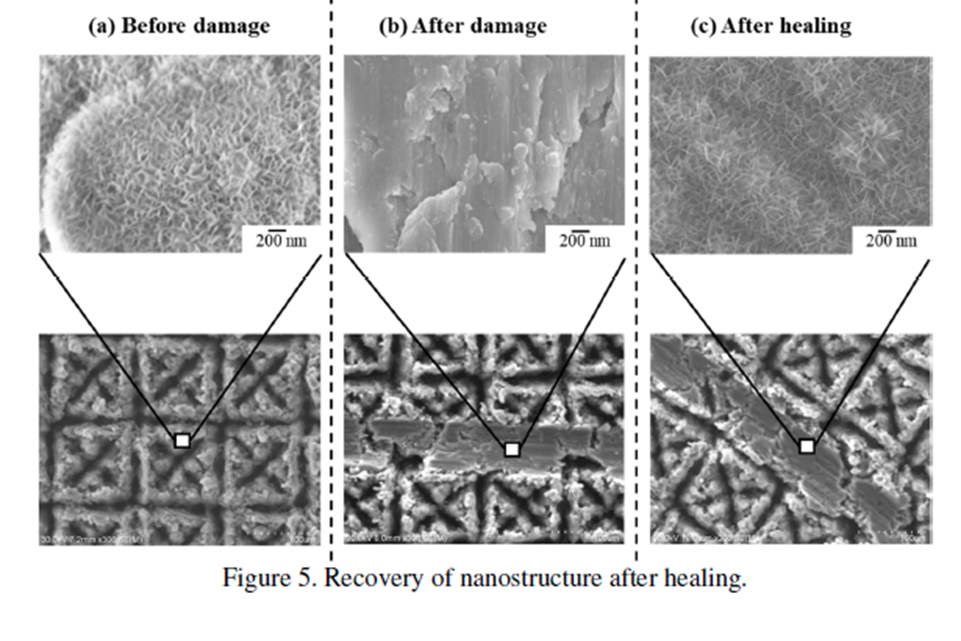
This technology creates superhydrophobic metal surfaces using laser texturing, hydrothermal treatment, and PFAS-free chemical functionalization to build triple-scale micro, sub-micro, and nanoscale architectures that deliver extreme water repellency. What sets it apart is a dual-mode self-healing mechanism: when surfaces sustain mechanical damage, nanostructures regrow through boiling water exposure, and thermal treatment then restores the surface chemistry, fully recovering performance. The result is a scalable, eco-friendly solution that maintains long-term protection across demanding applications.
Desired Partnerships
- License
- Sponsored Research
- Co-Development