Advantages
- Demonstrates broad spectrum antibacterial activity against both Gram-positive and Gram-negative multidrug resistant pathogens
- Designed to mimic natural antimicrobial peptides (AMPs) while overcoming their limitations
- Exhibits enhanced structural stability and resistance to proteolytic degradation, leading to prolonged activity
- Acts through membrane disruption, reducing the likelihood of resistance development and offers potential for better bioavailability compared to traditional peptide-based therapeutics
Summary
Antimicrobial resistance (AMR) is rapidly emerging as one of the most pressing global health challenges, limiting the effectiveness of conventional antibiotics and increasing the risk of untreatable infections. While natural antimicrobial peptides (AMPs) have shown promise as alternatives, their clinical use has been restricted due to poor stability, rapid degradation, and potential toxicity. This technology introduces a novel class of synthetic antimicrobial agents known as sulfonyl-γ-AA peptide foldamers, engineered to replicate the beneficial properties of natural AMPs while addressing their key limitations. These molecules adopt a right-handed helical structure, enabling them to interact effectively with bacterial membranes and disrupt them, leading to rapid bacterial cell death.
The lead candidate has demonstrated strong activity against a wide range of multidrug-resistant bacteria, including both Gram-positive and Gram-negative strains. Unlike traditional antibiotics that target specific cellular pathways, this technology works by physically disrupting bacterial membranes, a mechanism that significantly reduces the chance of resistance development. From a commercial perspective, this innovation is well positioned within the growing global antimicrobial market, driven by increasing awareness of AMR and the urgent demand for new therapeutic solutions. The technology aligns with current industry trends focused on next generation antibiotics and peptide mimetics, offering a promising opportunity for pharmaceutical development and licensing.
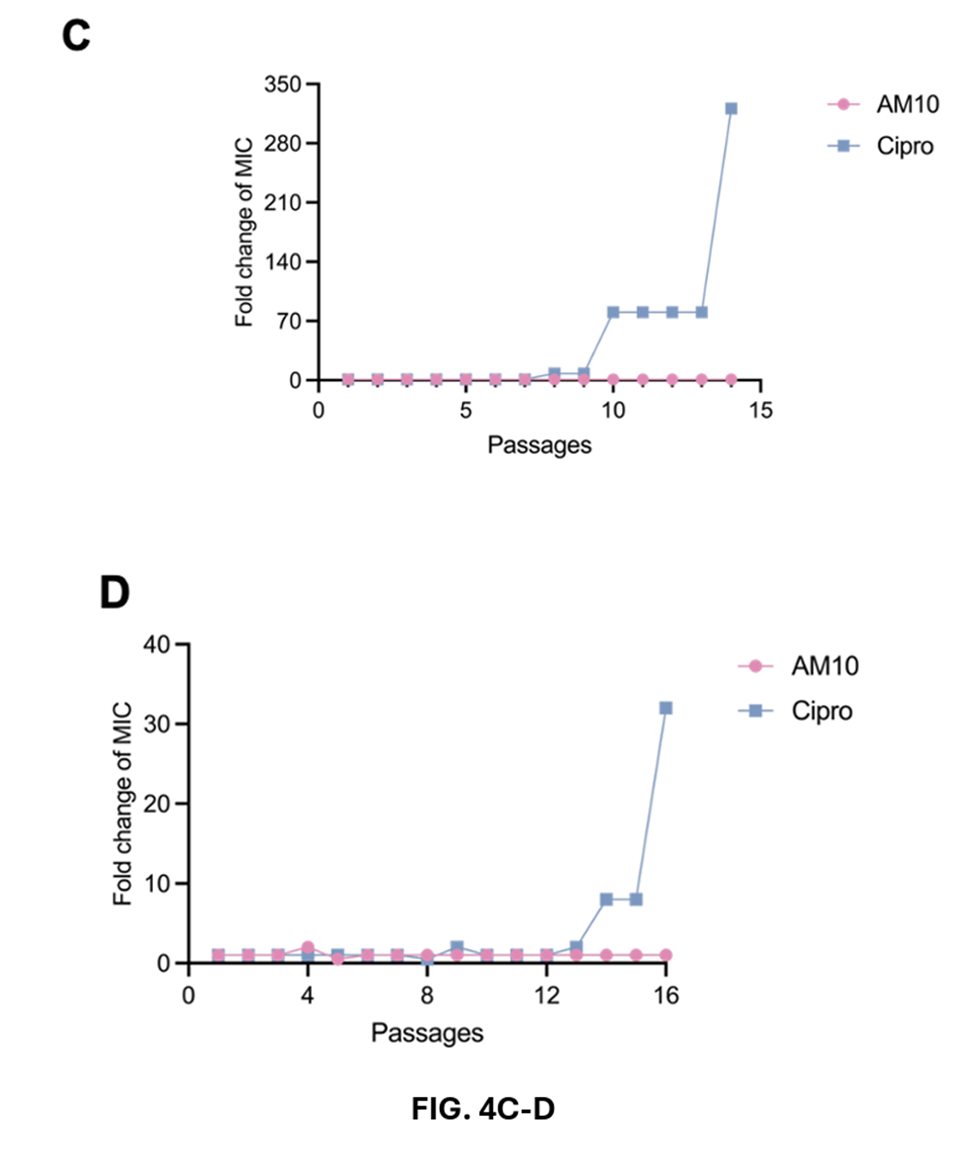
FIG. 4C-D are a series of images depicting drug resistance development of AM10 against (C) E coli and (D) MRSA
Desired Partnerships:
- License
- Sponsored Research
- Co-Development